Anna Meyer
Flussfluchten
20.03. - 23.04.2026
Anna Meyer, born in Schaffhausen in 1964, lives and works in Vienna.
Her art is displayed on canvas as well as in expanded installations and public spaces. Anna Meyer uses painterly means to search for solutions and ways out of our social dilemma. Surreal imagery and colorful pop-art gestures lay themselves over the wounds of this world.
Gloomy visions of the social present are transformed into a radiant opposite through a light-flooded color palette. Landscape painting is reinterpreted. Anna Meyer combines feminist perspectives with a sharp eye for the current political, social, and climatic situation. She questions power structures and shows how stubbornly ecological crises and social inequalities are intertwined. Her art acts as a visual warning system—critical, humorous, and radically contemporary.
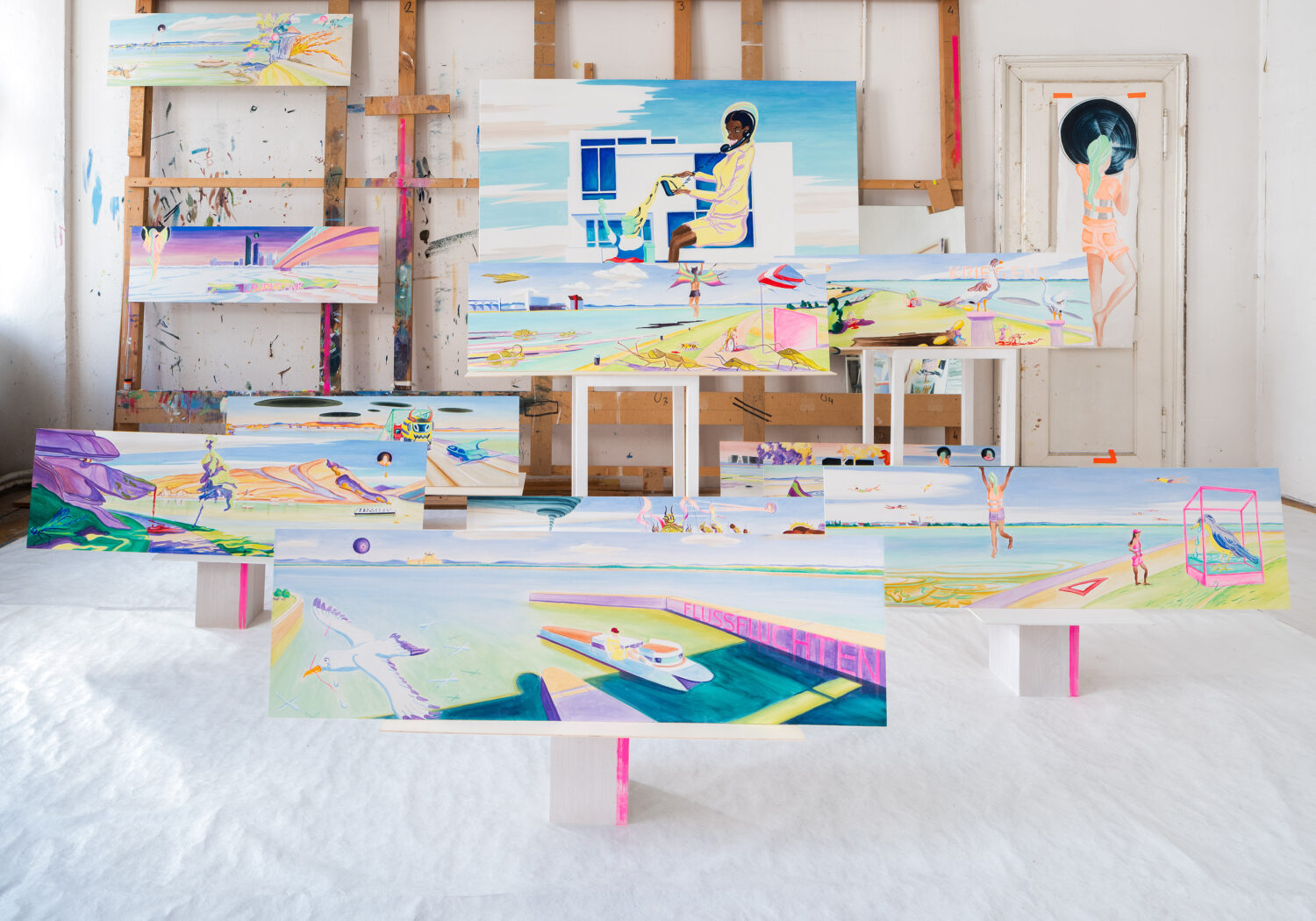
The current exhibition at Krobath Vienna is based on a series of paintings that Anna Meyer created last year along the Danube Cycle Path in Lower Austria.
“Anna Meyer’s paintings have gained radiance in recent years; they seem to glow from within, burning beneath the eyelids directed at them. However, the reason for this ‘burning intensity’ is not only the expressively intensified, sometimes pop-artishly garish colors of the mostly large-format paintings, but above all their explosive content.”
(Raimar Stange, Artmagazine)
“In Anna Meyer’s works, the post-truth era’s slogan-like, emotionally charged information scarcity encounters people who, remaining passive, watch themselves live.”
(Severin Dünser, Der Wert der Freiheit, Belvedere 21)
“Only when we look behind the scenes do we become aware of the true theatricality of our modern human existence. This is the great strength of Anna Meyer’s art: becoming aware of ourselves and others in our shared interaction with the world.”
(Sabina Mlodzianowski, exhibition text Krobath Berlin)
“Meyer’s works are divided into different series that take a distinctly critical stance on contemporary issues affecting our current way of life, such as economization and digitalization, as well as environmental crises, landscape destruction, and their political implications.”
(Patricia Grzonka)
Further informations:
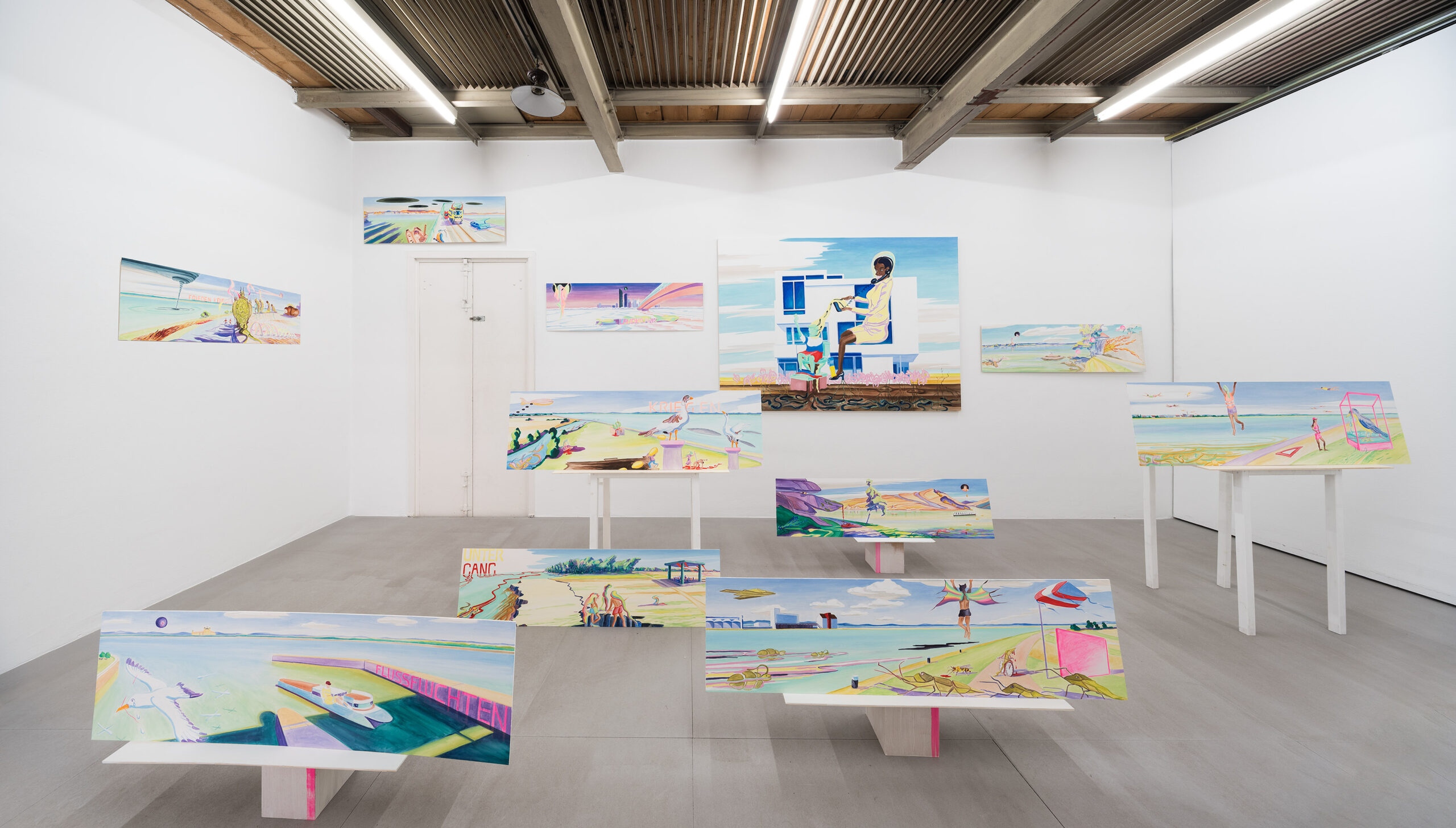
Installation View. Photo: Rudolf Strobl
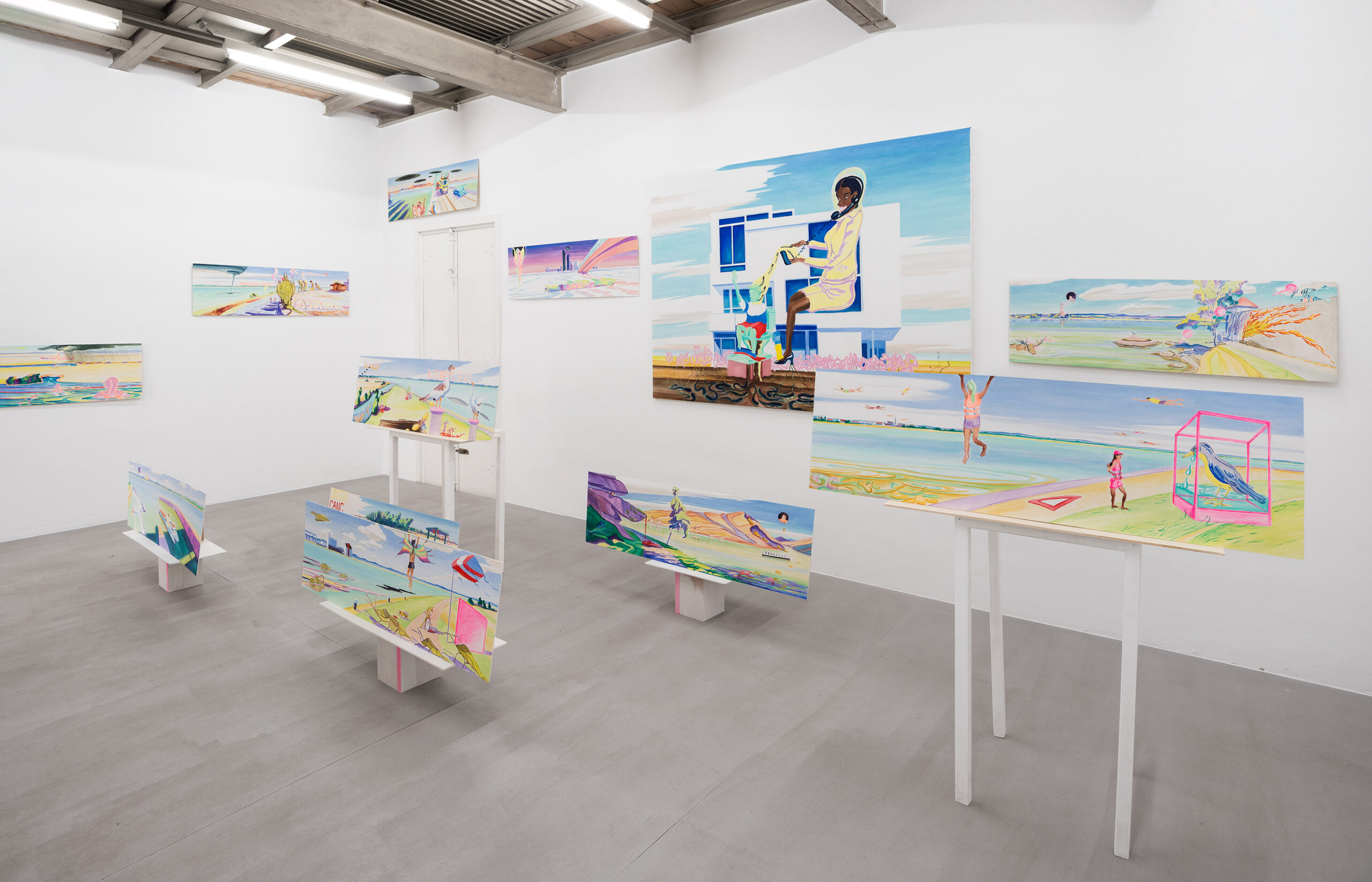
Installation View. Photo: Rudolf Strobl
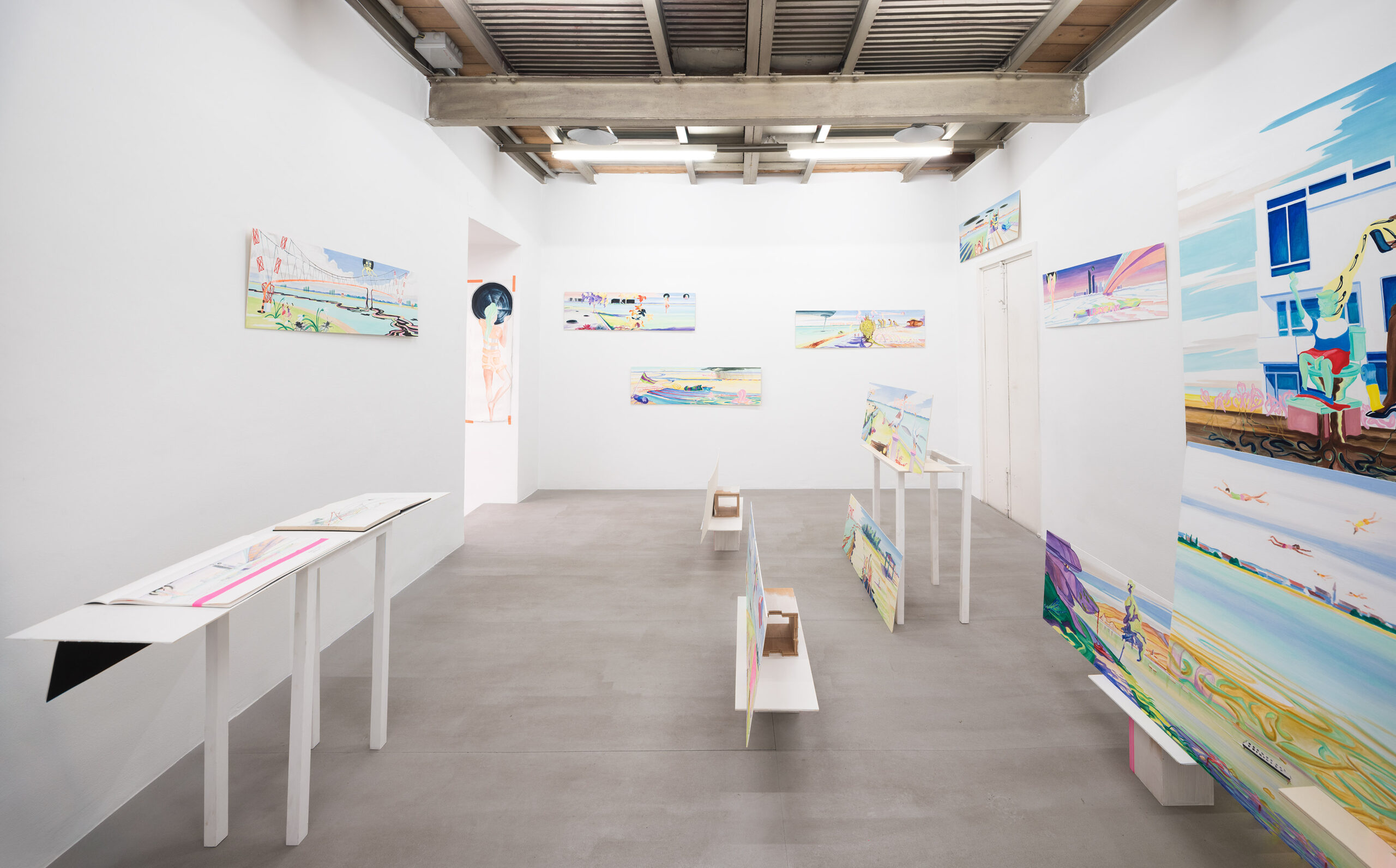
Installation View. Photo: Rudolf Strobl
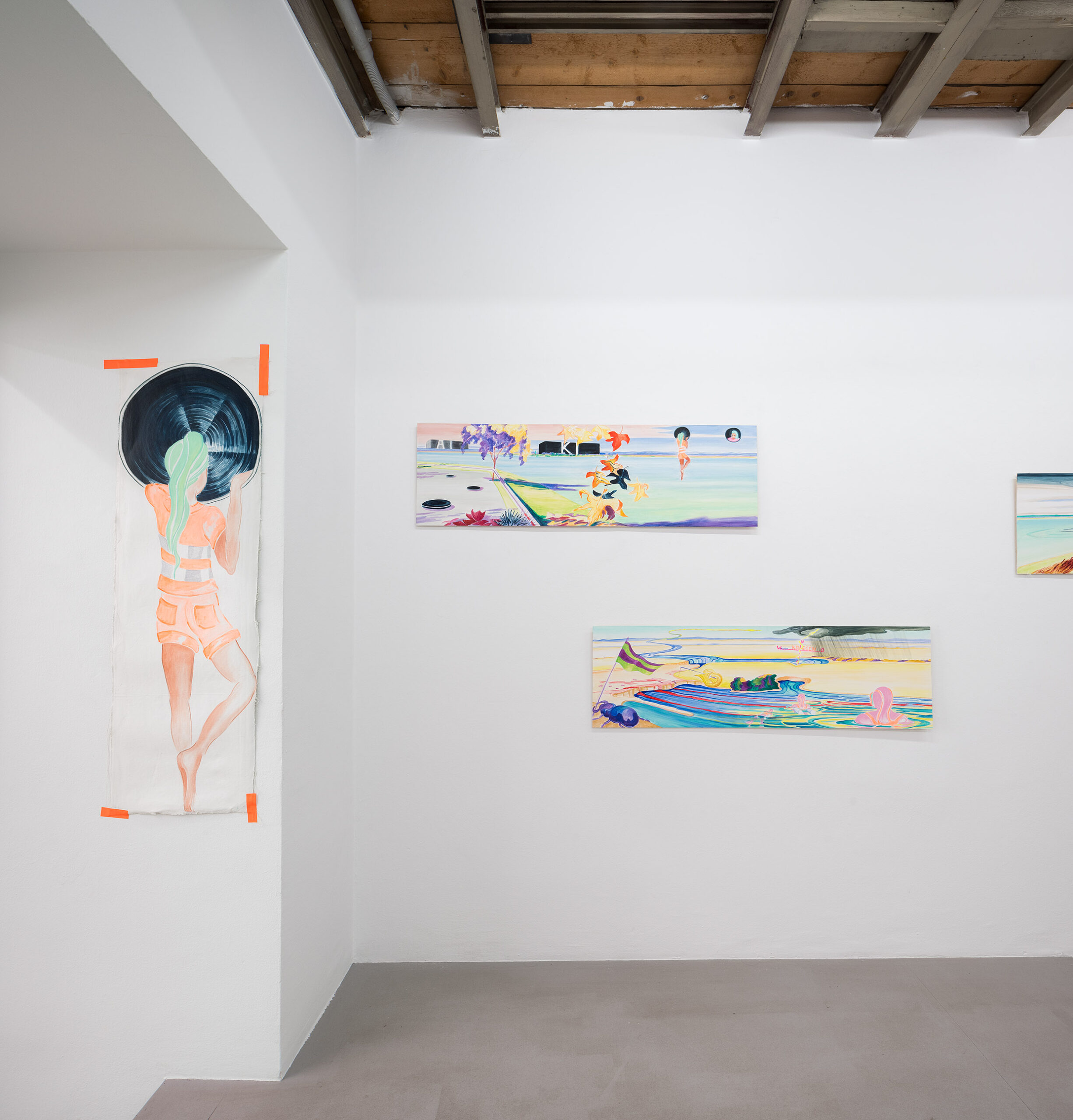
Installation View. Photo: Rudolf Strobl
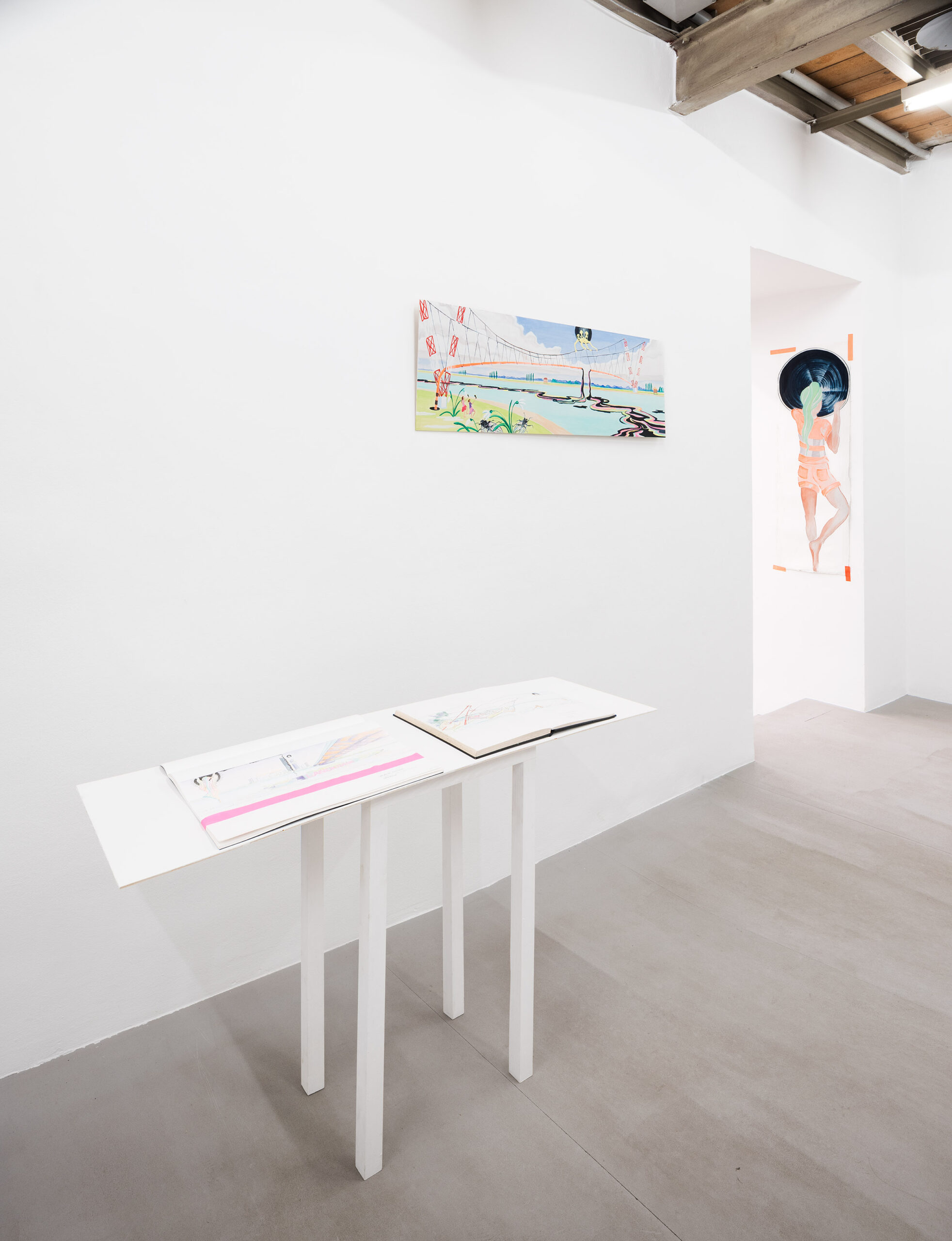
Installation View. Photo: Rudolf Strobl
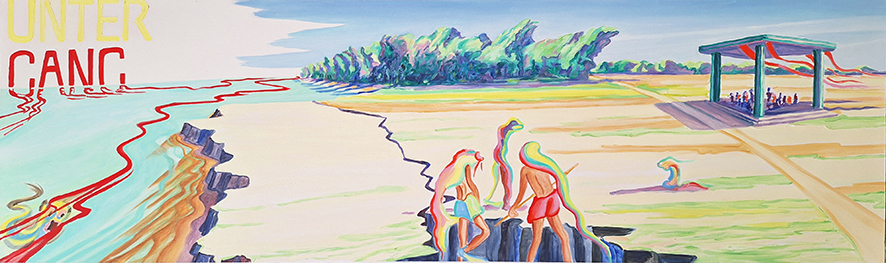
Unter Gang, 2025
Oil on plywood
36 x 120 cm
Unique
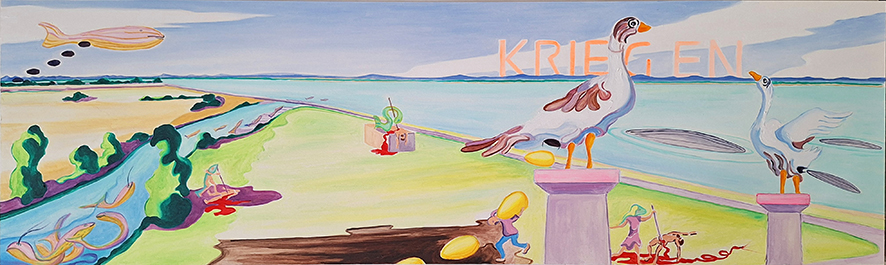
Krieg En, 2025
Oil on plywood
36 x 120 cm
Unique
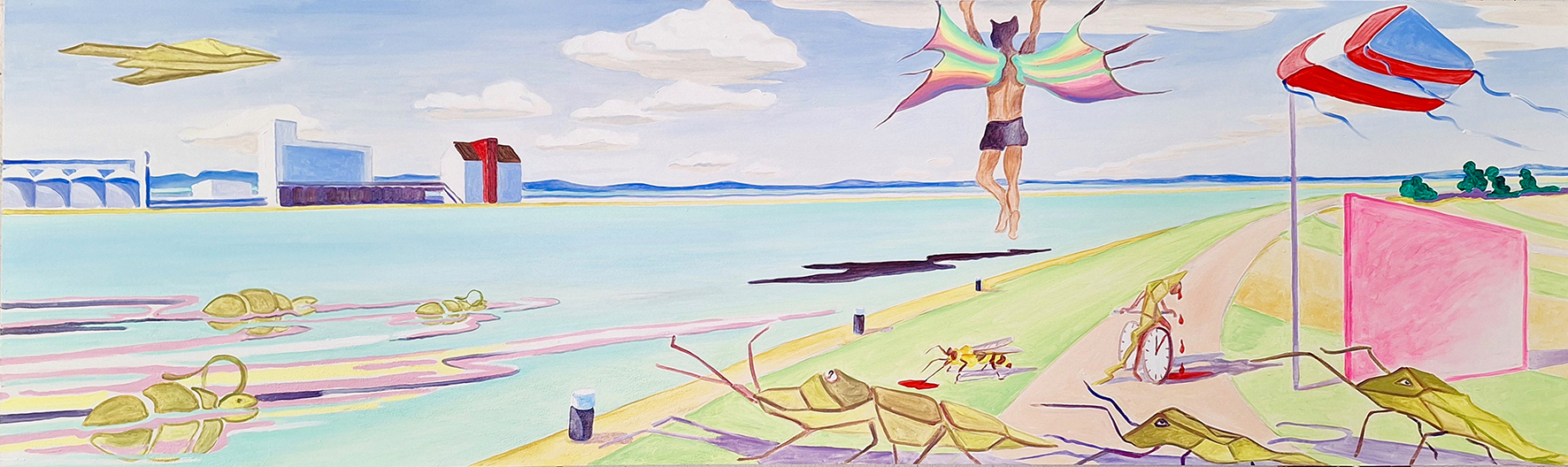
Wenn die Schönheit der Welt in die Grausamkeit der Zeit fällt, 2025
Oil on plywood
36 x 120 cm
Unique
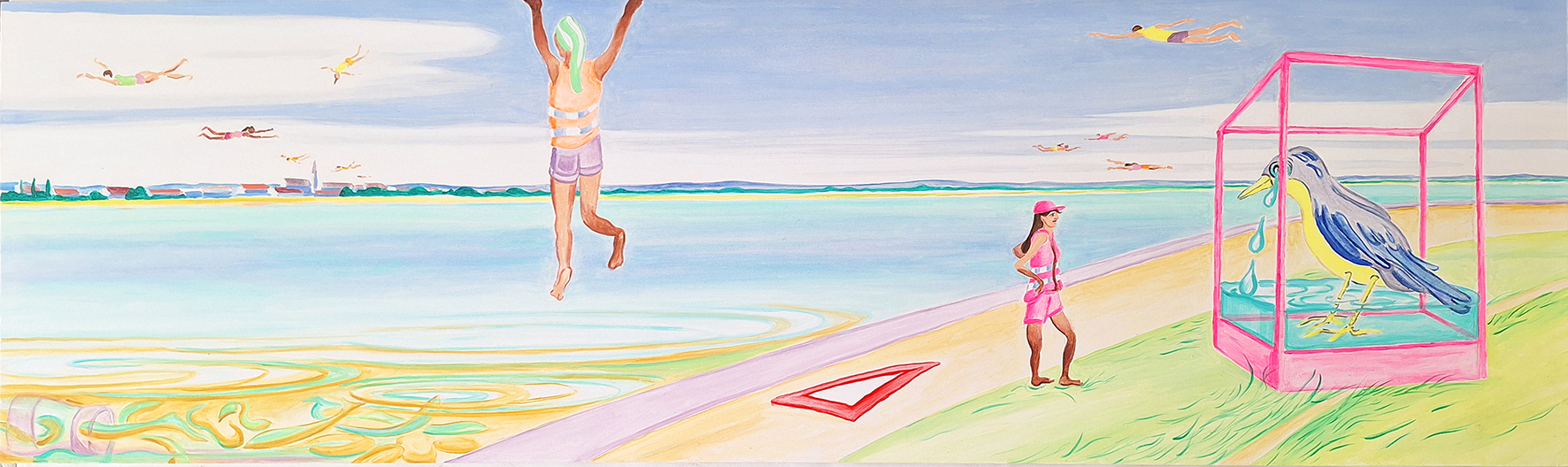
Seelensalz, 2025
Oil on plywood
36 x 120 cm
Unique
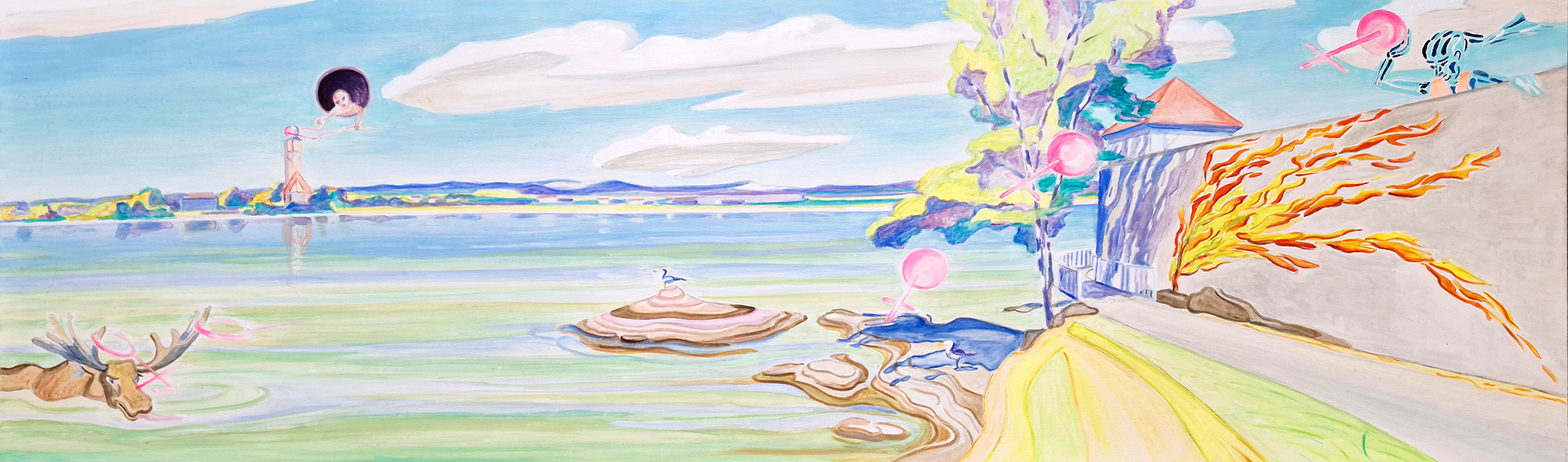
Ein Signalschuss aus einer anderen Zeit, 2025
Oil on plywood
36 x 120 cm
Unique
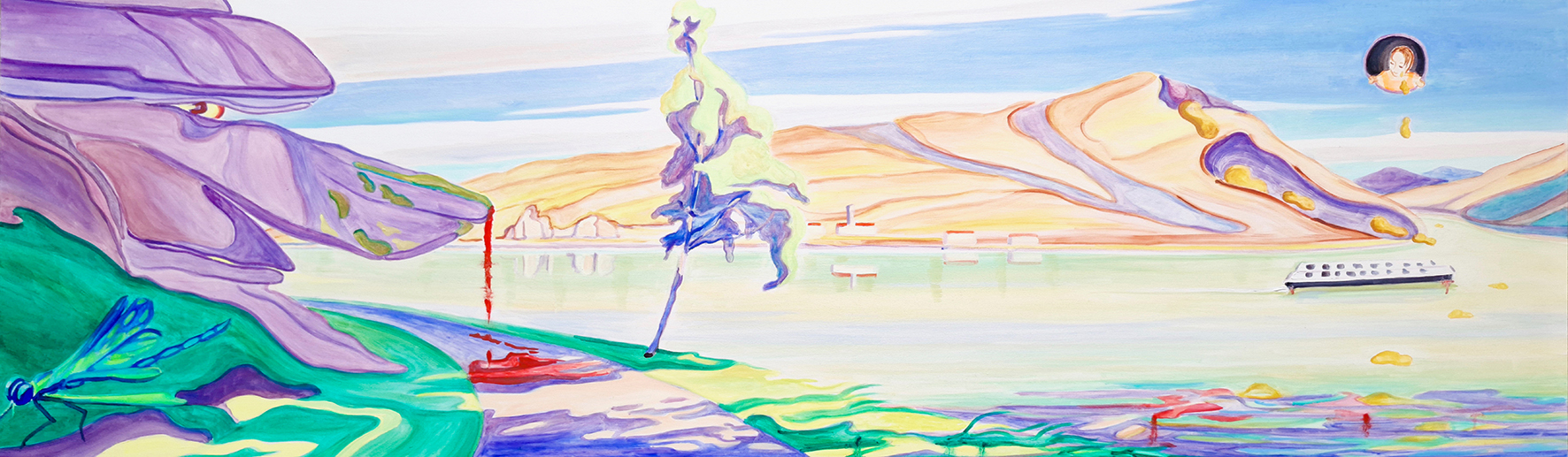
Zeitreisende, 2025
Oil on plywood
36 x 120 cm
Unique
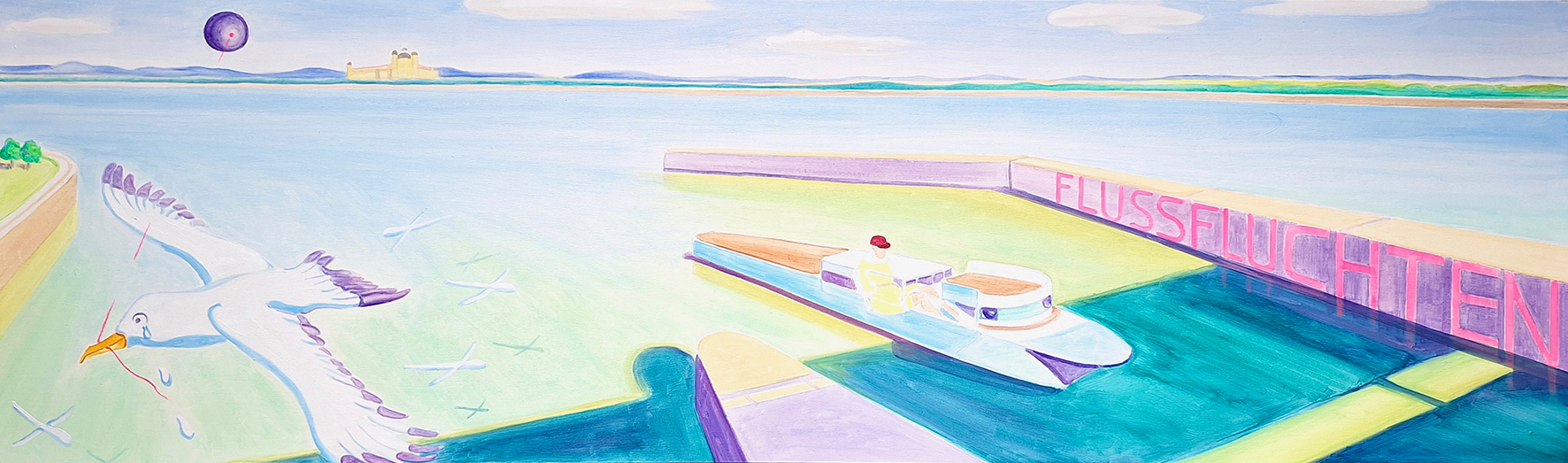
Flussfluchten 1, 2025
Oil on plywood
36 x 120 cm
Unique
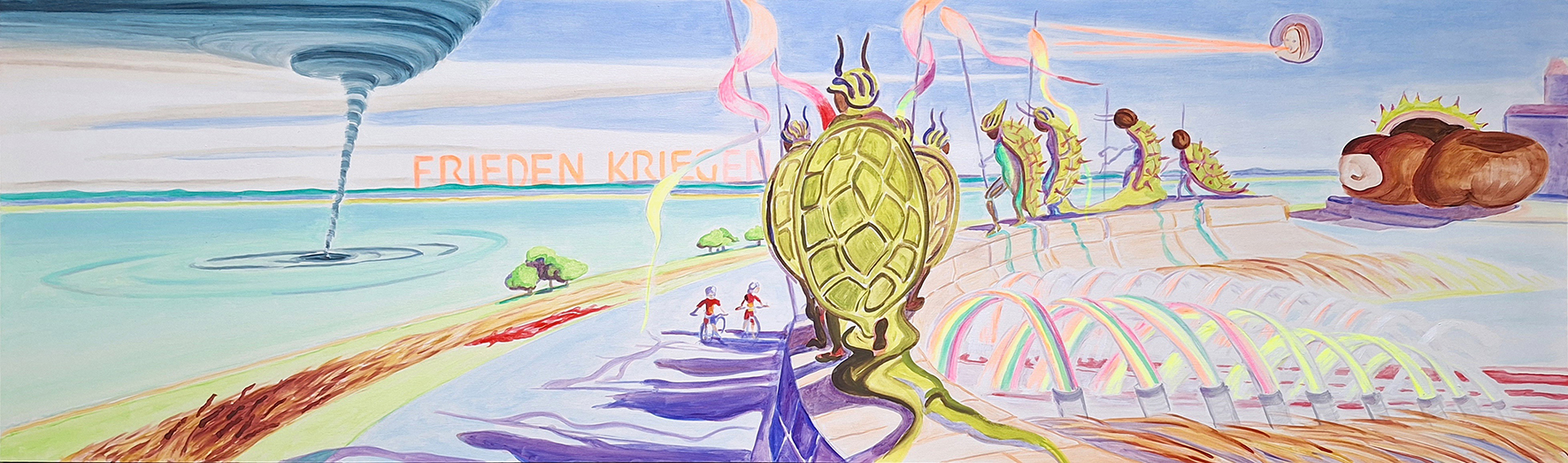
Frieden Kriegen, 2025
Oil on plywood
36 x 120 cm
Unique
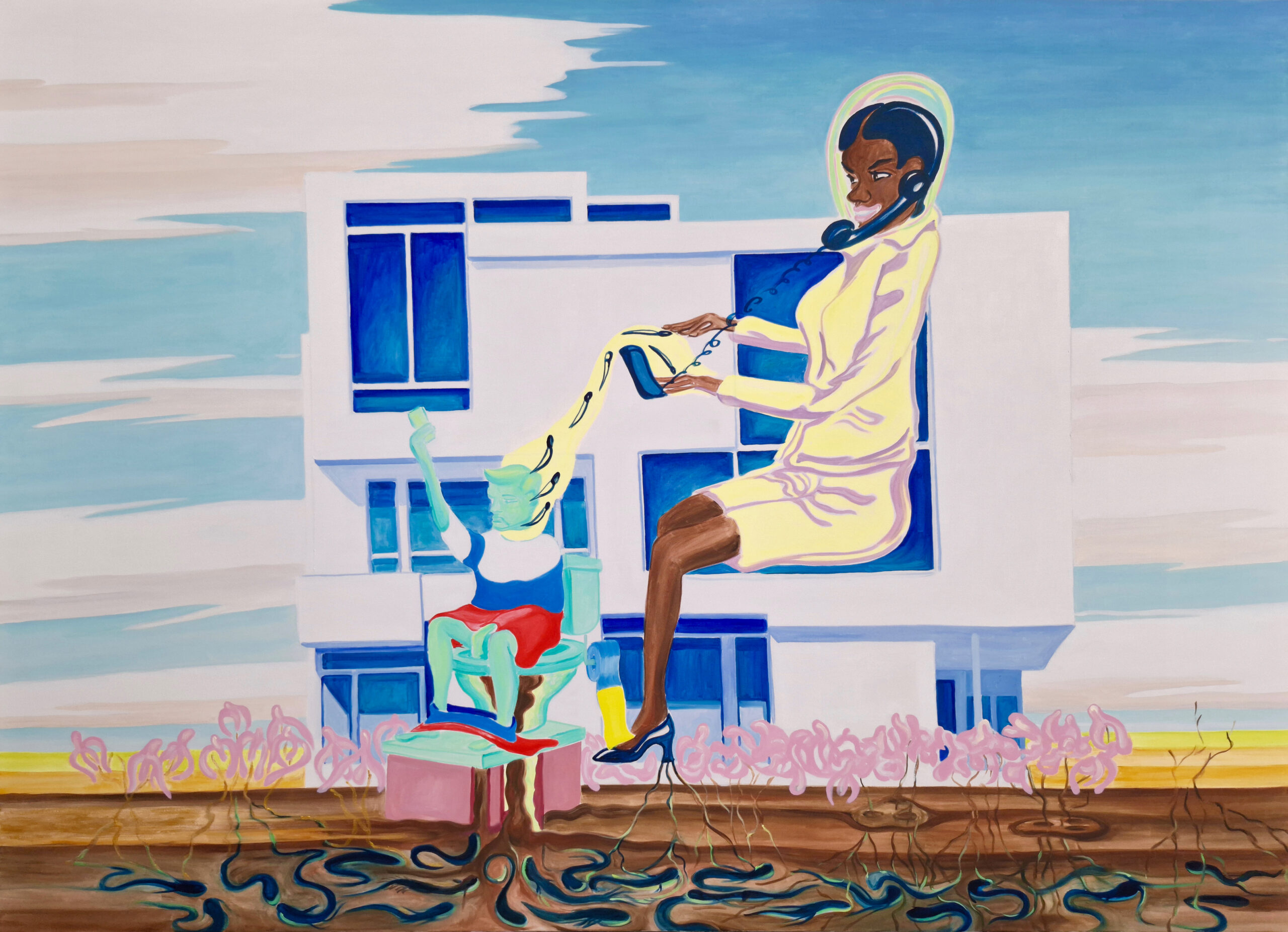
Wo Man, 2025
Oil on canvas
120 x 160 cm
Unikat